

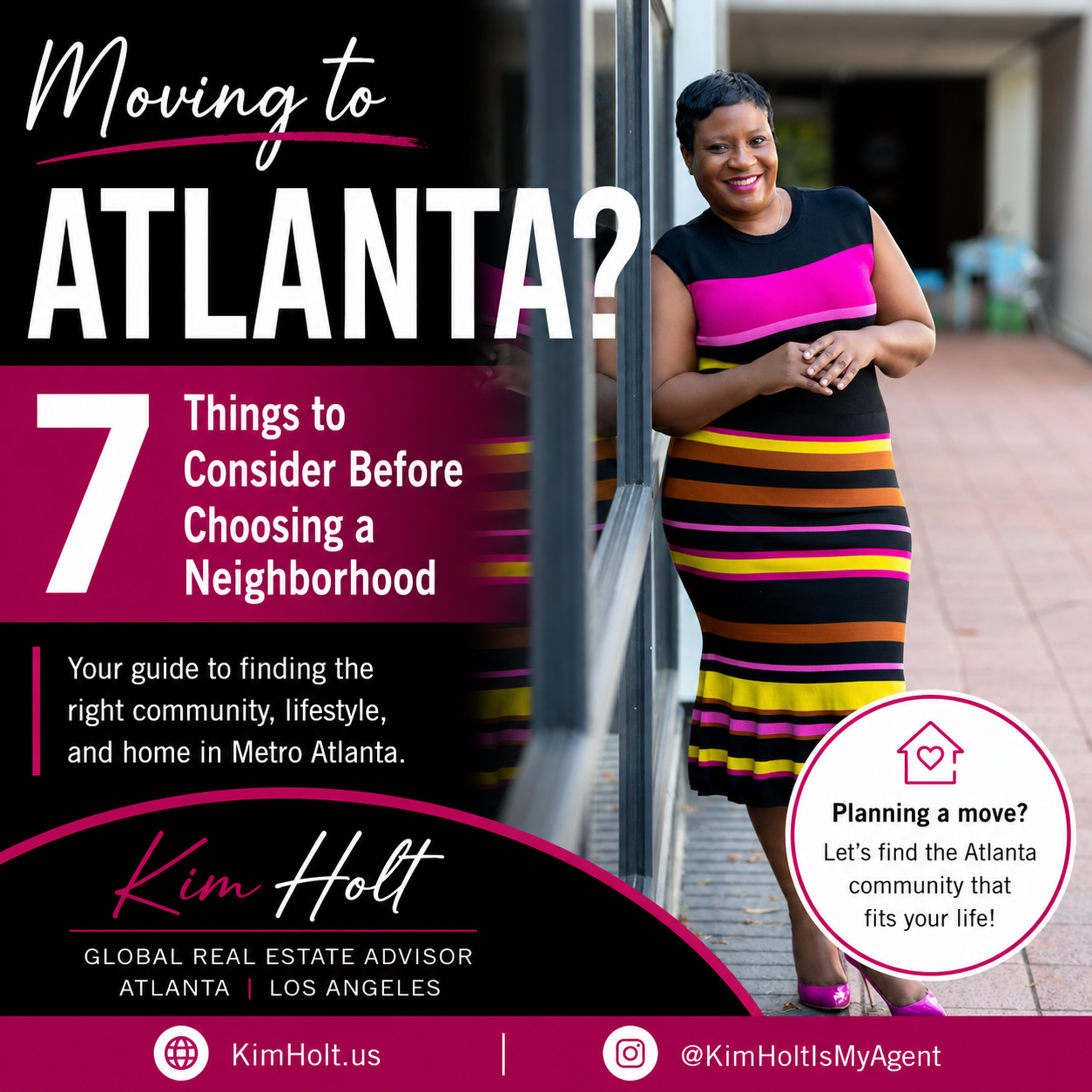

The community you choose will affect your commute, lifestyle, monthly expenses, school options, access to entertainment, and future resale potential.
Before you begin touring homes, here are seven important things to consider when deciding where to live in Metro Atlanta.
1. Decide What “Atlanta” Means to You
When people say they are moving to Atlanta, they may be referring to the City of Atlanta or one of the many surrounding suburbs.
Living in the city can place you closer to restaurants, entertainment, cultural attractions, sporting events, and major employment centers. Communities outside the city may offer larger homes, more land, quieter surroundings, or a more suburban lifestyle.
Neither option is automatically better. The right choice depends on how you want your daily life to feel.
Before beginning your search, ask yourself:
- Do I prefer city energy or suburban space?
- Do I want to walk to restaurants and entertainment?
- How much home and yard do I need?
- How important is neighborhood privacy?
- Do I want newer construction or an established community?
Your answers will help narrow a large search area into a manageable list of communities.
2. Test the Commute Before Making a Decision
A location that appears close on a map may feel very different during Atlanta’s peak traffic hours.
Before committing to a neighborhood, test the drive at the time you would normally travel. Consider your commute to work, the airport, schools, family, medical providers, places of worship, and the activities you enjoy most.
For some buyers, being near a major highway is essential. Others would rather live farther from the city in exchange for additional space or a quieter environment.
The best location is not always the one closest to downtown. It is the one that supports the life you actually live.
3. Think About Your Lifestyle, Not Just the House
A beautiful home will not feel like the right home when the surrounding community does not match your lifestyle.
Think about how you spend your evenings and weekends. Would you enjoy being close to:
- Walking trails and parks?
- Golf or tennis?
- Shopping and dining?
- Live music and nightlife?
- Senior activities?
- Lakes or outdoor recreation?
- The airport?
- Family-friendly events?
- Arts and cultural attractions?
A neighborhood should support more than your housing needs. It should make your everyday life easier and more enjoyable.
4. Research Schools and Educational Options
School options can be important even for buyers who do not currently have school-aged children. They can influence demand, neighborhood interest, and future resale considerations.
Research the public school assignments for each property rather than assuming that every home in a city or ZIP code serves the same schools. Buyers may also want to explore private schools, charter schools, magnet programs, early-learning centers, and nearby colleges.
School boundaries and assignments can change, so families should verify current information directly with the appropriate school system before purchasing.
5. Understand the Complete Cost of Living in the Community
Your monthly housing cost includes more than the mortgage payment.
Before making an offer, review:
- Property taxes
- Homeowners insurance
- Homeowners association dues
- Community or club fees
- Utility expenses
- Commuting and transportation costs
- Landscaping or exterior maintenance
- Potential flood or specialty insurance requirements
Two similarly priced homes can have very different total monthly expenses. Understanding the complete cost helps you select a home that remains comfortable after closing.
6. Consider the Home’s Future Resale Appeal
You may not be thinking about selling when you are preparing to buy, but your future buyer matters.
Features that may support long-term appeal include a functional floor plan, convenient location, sufficient storage, updated major systems, access to transportation, neighborhood amenities, and a well-maintained community.
Unique homes can be wonderful, but extremely unusual layouts, limited parking, difficult access, or significant deferred maintenance may reduce the number of future buyers.
Your home should meet your needs today while still making sense as a long-term investment.
7. Work With an Advisor Who Understands Relocation
Relocation buyers are often making several major decisions at once. You may be choosing a city, neighborhood, school system, commute, lender, insurance provider, and home—all while managing a move.
An experienced real estate advisor can help you compare communities, identify potential concerns, explain the buying process, coordinate virtual tours, connect you with trusted professionals, and create a search based on your lifestyle—not merely your price range.
The goal is not to sell you the first available house. The goal is to help you make a confident and informed decision.
Let’s Find the Atlanta Community That Fits Your Life
Atlanta offers a wide variety of lifestyles, from high-rise city living and historic neighborhoods to golf communities, new construction, established suburbs, and spacious homes outside the city.
The right neighborhood is personal. It should reflect how you live now, where you are going next, and what you want your homeownership experience to provide.
As a real estate advisor serving Atlanta and Los Angeles, I help buyers, sellers, and relocating families navigate important real estate decisions with personalized guidance and a clear strategy.
Planning a move to Metro Atlanta? Contact Kim Holt to schedule a personalized relocation and home-buying consultation.
Kim Holt
Global Real Estate Advisor
Atlanta | Los Angeles
@KimHoltIsMyAgent


